Modern Physics Lab (PHYS 220)
I got to play with radioactive cesium samples (Cs-137) to teach my students about beta emission and absorption! (These samples went through proper safety grading to ensure they were safe for handling! According to Dr. Mary Kertzman (I miss her too), my students could even safely lick the sample, just not swallow it haha.) Here's the process we were investigating:
I used a SpecTech ST360 Radiation counter hooked up to a GM tube to measure the radiation (gamma rays) coming off of these samples. The equipment is pictured below, taken from an online resource.
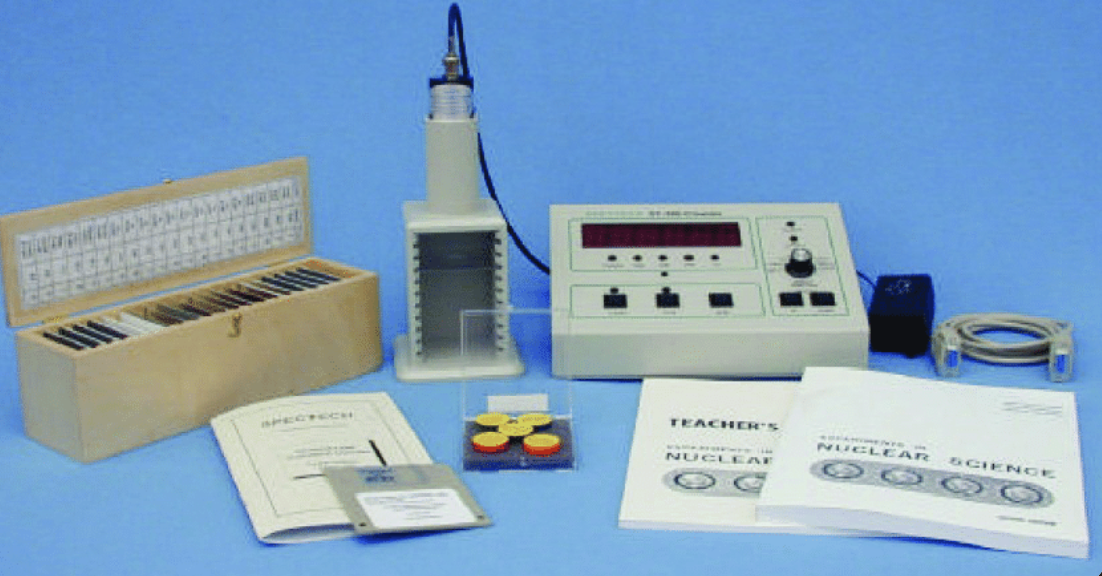
We put different thicknesses of iron slabs between the detector and the sample and measured how many high-energy photons hit the detector. I had them analyze the data and interpret it in the context of the Exponential Law of Absorption. They empirically determined µ, the material-dependent absorption coefficient. Our iron slabs were graded to have a µ in the range of 0.5 ≤ µ ≤0.8 inverse cm, and my students got fantastic data!
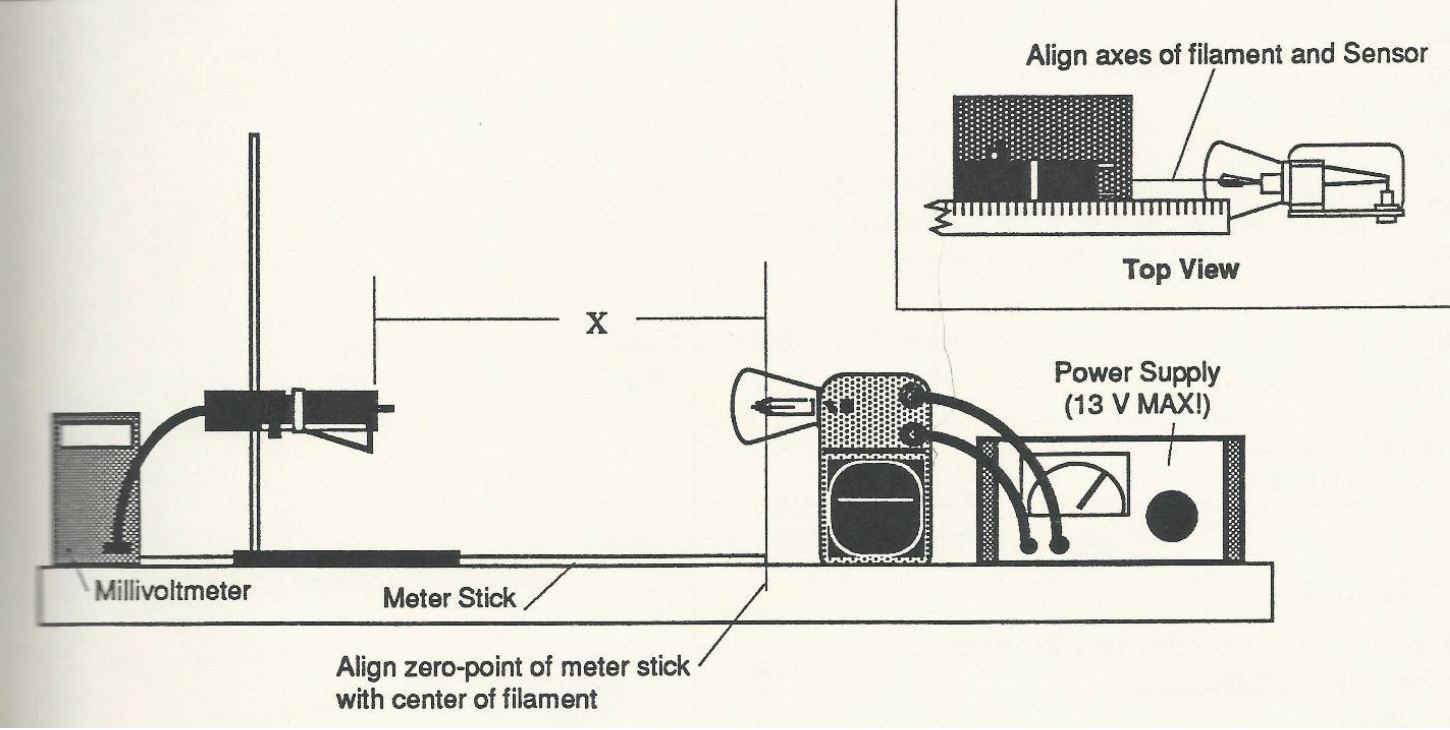
I also learned how to use a radiation sensor (I think it was a PASCO TD-8553 Radiation Sensor) with a mechanical shutter, hooked up to a digital multimeter to study the radiation output of a Staffan-Boltzman lamp! We used the lamp's callibration curve to estimate its temperature and then we collected data to study the relationships between intensity and distance, and well as intensity and temperature of the source.
A popular lab was "Superposition of Waves" in which I got to learn how to use an old oscilliscope as well as a PASCO Fourier Synthesizer.
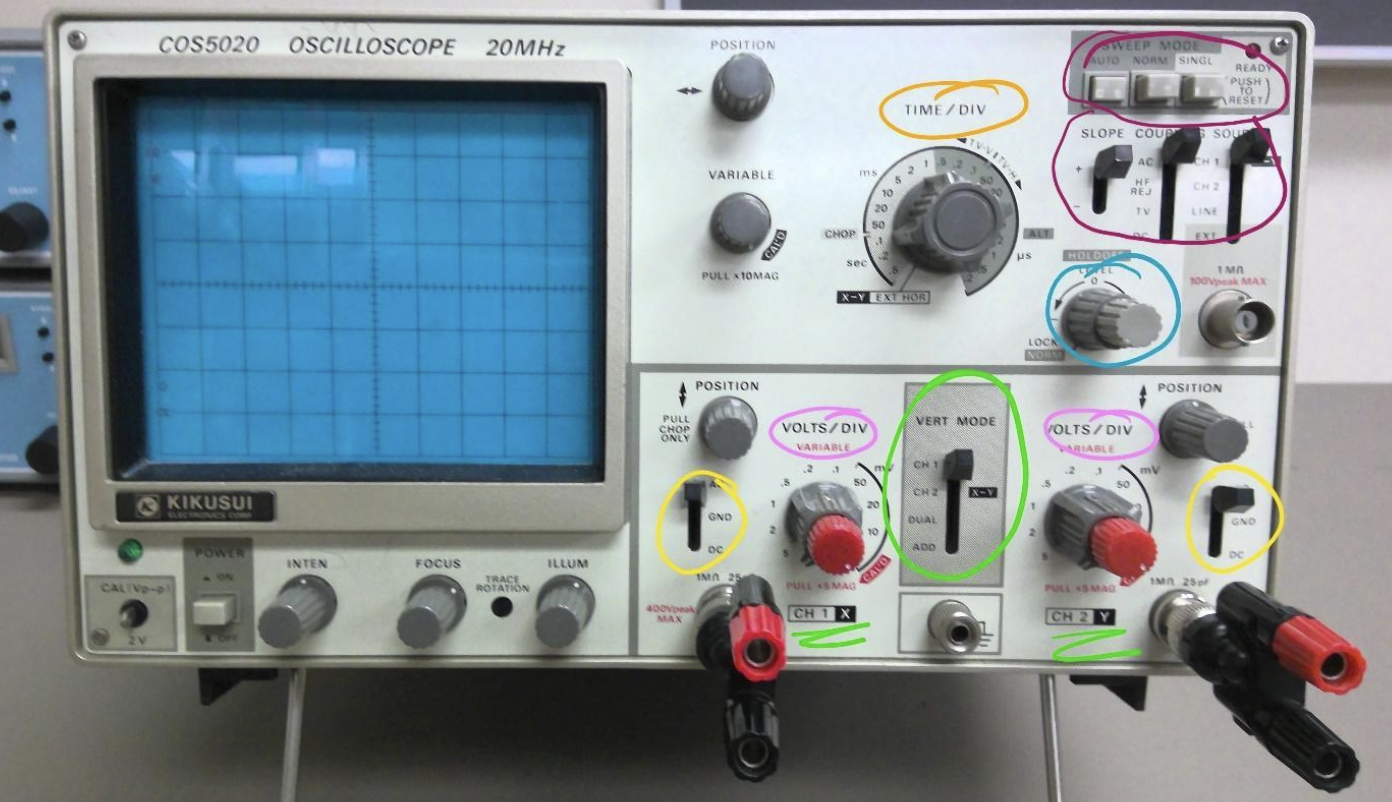
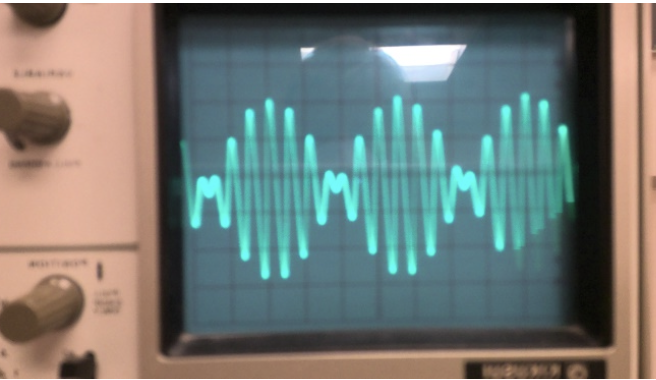
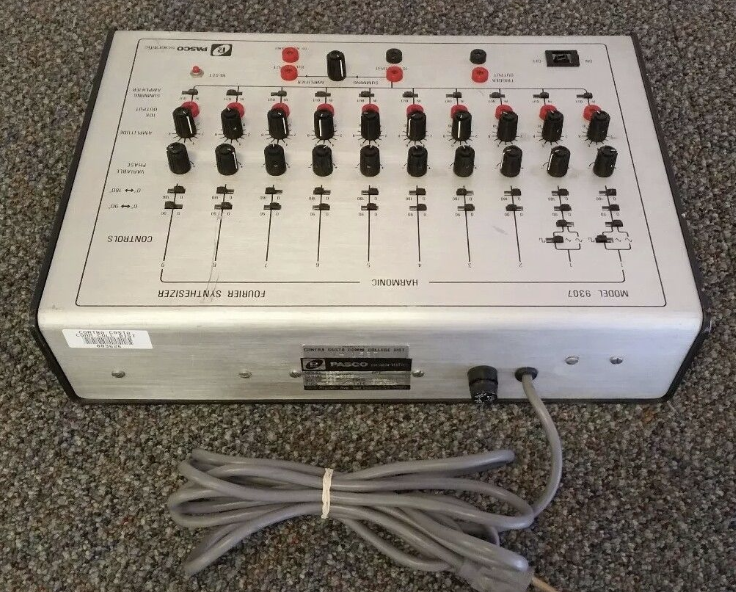
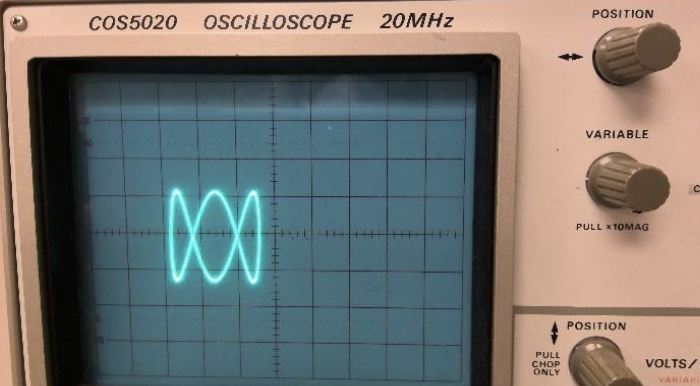
In this lab, we put alternating voltage from function generators into the oscilliscope to empircally study the Heisenberg Uncertainty Principle and make frequency measurements. We also used the Fourier Synth to stuyd fundamental frequencies and harmonics empircally. I had them hookup the equpiment to speakers and build different waveforms like square waves, triangle waves, and sawtooth waves by giving them tables of relative amplitude, harmonic number, and phase of each wave to add in with the synth. The class was very noisy but ended up being extremely fun. The Lissajous Figures we studied were also very popular: